Bakery Stack: Cooking Games
- 3.9
- Rating
- 50.00M
- Installs
- Free
- Price

 Analysis by App-foxy
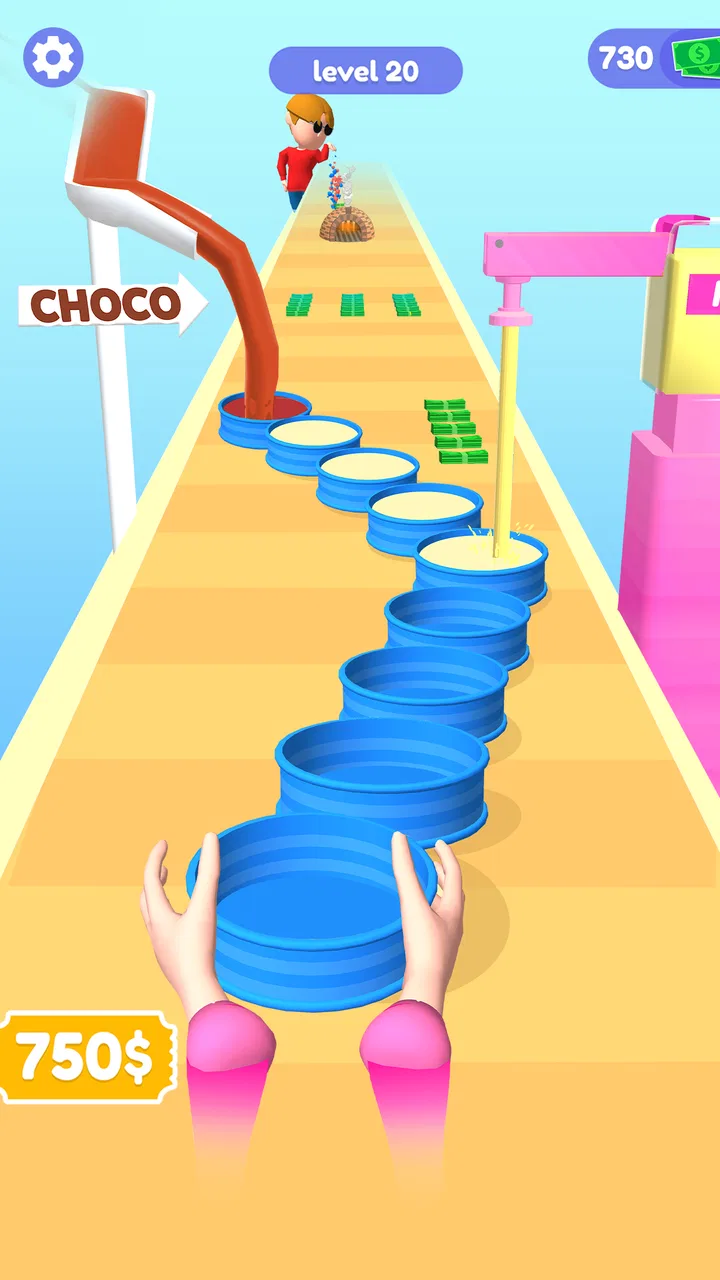
I spent time with Bakery Stack: Cooking Games as a quick, casual baking game, and my first impression was easy to understand: it turns cake preparation into a short race of timing, movement, and careful stacking. The idea is simple enough to pick up immediately, but the small mistakes become much more noticeable once you try to move efficiently. You are not managing a full bakery or following a long recipe book. Instead, the appeal comes from making a cake cleanly while the game keeps the pace moving.
That focused design makes it a good fit for short breaks. I could play a round without setting aside a large block of time, then stop without feeling that I had abandoned a complicated campaign. The game is free, belongs to the casual category, and is made by Fried Chicken Games. It has reached more than fifty million installs and holds a 4.1 average from roughly forty-nine thousand ratings, which gives a useful sense of its broad appeal without changing the fact that the experience is very straightforward.
How the basic bakery run feels
The normal workflow is built around a clear sequence: start the cake, handle the layers, add cream with care, and keep the result together as the course develops. The store summary describes the game as a baking race, and that is the right way to approach it. I found that looking at each action as part of a route worked better than treating every tap as an isolated task. The aim is not merely to finish; it is to finish without wasting movement or making the cake uneven.
You May Also Like

 Blood Strike: 2.5 Anniversary
Blood Strike’s Loadouts Turn Every Drop Into a Tactical Gamble
A close look at Blood Strike’s custom loadouts: how fast access to signature weapons reshapes its battle royale rhythm, rewards preparation, and narrows the gap between fights.

 Pandora - Music & Podcasts
Pandora’s Music Is Easy to Start, but Harder to Recover
Pandora’s strength is its low-effort path from a seed to a station. Its weak spot is how much confidence it asks you to place in connection, setup, and quiet recovery.

 8 Ball Pool
 Is Built on Rivalries, Rematches, and Routine
A close look at the rivalries, rematches, shared routines, and unanswered safety questions that turn a quick pool match into a persistent mobile community.

 Samsung Music
’s Quiet Strength Is Playing What You Already Own
Its reach comes less from spectacle than from dependable access to a personal library. That simplicity is both the app’s strongest retention engine and its ceiling.

 AccuWeather: Weather Radar
AccuWeather Review: A Quick, Clear Forecast for Everyday Decisions
For everyday plans, the best forecast is the one you can understand quickly. AccuWeather makes rain timing, radar, and local conditions easy to act on, with a few trade-offs.

 Hill Climb Racing
Why Hill Climb Racing Still Turns Crashes Into One More Run
A tiny car, a bumpy hill and one more upgrade: Hill Climb Racing keeps resurfacing because its simple chaos makes every near-miss feel personal.
More From Our News Desk
View All News


At the beginning, I recommend playing slowly enough to understand how the cake responds to your input. A rushed first attempt can make the game seem less precise than it is. Once I learned the rhythm, each run became a small exercise in anticipation. I tried to position myself before the next ingredient or cream section rather than correcting my path at the last moment. That habit matters because late corrections often create more trouble than the original mistake.
The most useful everyday scenario is a short waiting period: a few minutes before an appointment, during a commute break, or while taking a breather between tasks. This is where the game makes the most sense. It does not ask me to remember a large story, manage several menus, or reconnect with a complicated progression system. I can open it, complete a few attempts, and leave. Players looking for a calm, long-form cooking simulator may find that too light, but people who want a quick reflex game will understand the purpose immediately.
One practical tip is to separate learning from chasing a good result. On an early run, I pay attention to the path and the timing of the cream rather than trying to produce a perfect cake. After that, I repeat the same route with fewer unnecessary adjustments. This creates a simple two-step routine: first observe, then optimize. It is more effective than restarting every time something goes slightly wrong, because a failed attempt can still reveal where the course asks for a change in timing.
The cake itself also changes how I think about risk. Moving quickly may save time, but a careless correction can affect the whole stack. I found that controlled movement was usually more valuable than frantic movement. That trade-off is the heart of the game: the safest approach is not always the fastest, while the fastest approach is not always the cleanest. New players should accept a few imperfect runs, because trying to force a flawless result before learning the route makes the opening experience unnecessarily frustrating.
Small settings checks that improve a session
Before settling into longer play, I would check the available in-game settings rather than assuming the default setup is ideal. The most important reason is comfort. Casual games are often played in short bursts, and a distracting sound level, an awkward control feel, or an unwanted interruption can make a simple round feel more irritating than it should. I do not treat the settings menu as a place to search for secret advantages; it is mainly a place to make the game easier to live with.
I also suggest checking the current version shown on your device. The game is listed at version 0.6.25 and supports devices running Android 6.0 or later. That makes it accessible to many older Android phones, although actual comfort will still depend on the device and how smoothly it handles the game. If the game feels less responsive than expected, I would first close other demanding apps, check that the phone is not overloaded, and then try again before blaming my timing.
Another useful habit is to begin with a short test session after installing or updating. I use the first few rounds to see whether the controls feel natural with one hand and whether the display remains comfortable. This is especially relevant because the game is designed around quick reactions. A control arrangement that feels fine for a single attempt may become tiring after repeated runs. Adjusting how I hold the phone can be just as useful as changing a setting.
The age rating is Teen, so I would not present this as a preschool game simply because the subject is cakes. Parents should still look at the store page and the device’s purchase controls before handing over the phone. The game is free to download, while its in-app purchases are listed at $0.99 per item. I would keep purchase authentication enabled, particularly on a shared device. That is not a criticism of the core play, but it is a sensible step whenever a free game offers optional paid items.
One question many players have is whether payment is necessary to understand the game. My experience is that the basic appeal is the baking race itself, so I would begin without spending anything. If optional items become tempting, I would decide based on whether they genuinely improve my enjoyment rather than treating them as a requirement for learning the controls. The free starting point makes it easy to test the game first, which is exactly what I recommend.
Repeatable patterns for cleaner, faster attempts
Experienced play is less about tapping harder and more about removing wasted decisions. I try to read the upcoming section before my cake reaches it, then choose a line that leaves room for correction. This is a small but important change from beginner play. Instead of reacting only when an obstacle or ingredient is directly in front of me, I prepare for the next action while finishing the current one.
My preferred pattern is steady movement followed by a brief correction, not constant zigzagging. Repeated micro-adjustments make me lose track of the cake’s position and can turn a manageable section into a messy one. When the route looks open, I keep the movement simple. When the cream needs to be placed carefully, I slow down enough to prioritize alignment. That creates a useful rhythm: travel efficiently through open space, then become deliberate at the part that affects the final stack.
A second technique is to use failed runs as route notes. I mentally mark the point where I usually overcorrect, then enter the next attempt already expecting it. This is more reliable than hoping concentration alone will solve the issue. If I repeatedly make the same mistake, I change one variable at a time: approach earlier, move less, or delay the correction. Changing everything at once makes it impossible to know which adjustment helped.
There is also a trade-off between speed and visual neatness. A player chasing only completion may accept a rougher cake, while someone trying to improve a result needs to protect the stack from unnecessary movement. I prefer to aim for consistency first. Once I can finish several attempts without the same error, I gradually increase the pace. That order is important because speed built on unstable control usually collapses as soon as the course demands a more careful cream placement.
For short sessions, I use a three-run routine. The first run is for warming up, the second is for applying one specific adjustment, and the third is for seeing whether that adjustment holds under pressure. If I keep playing after that, I take a short pause rather than repeating the same frustrated attempt. This routine gives the casual format a little structure and helps prevent the game from becoming a cycle of automatic restarts.
One non-obvious strength is that the game rewards attention management more than complicated planning. I do not need a written strategy, but I do need to decide what deserves focus. When the path is easy, I conserve attention. When the cream section arrives, I stop trying to rush every action. That shift is useful for players who enjoy light skill games but do not want a demanding competitive system.
Where the simple design reaches its limits
The same simplicity that makes the game approachable can also limit its long-term appeal. If you want detailed recipes, ingredient management, restaurant decoration, character development, or a story-driven cooking adventure, this is not the right choice. Its identity is closer to an arcade-style cake challenge than to a full cooking simulation. Comparing it with management games is therefore unfair, but it is still important to know what you are giving up.
It may also disappoint players who need deep variety from every session. The central actions remain focused on stacking, movement, and cream placement. That gives the game a clean learning curve, but it means the experience depends heavily on whether you enjoy repeating a familiar action while trying to improve execution. People who prefer constant new recipes or a large collection of kitchen tools will probably be happier with a broader cooking title.
Another limitation is that precision can feel unforgiving when I am playing casually or while distracted. A relaxed game does not always mean a consequence-free game. If I am watching television, walking around, or trying to play with one hand while doing something else, my results become less consistent. The better approach is to treat each attempt as a tiny focused activity. That may sound obvious, but it explains why the game feels satisfying in a quiet break and annoying when I expect it to play itself.
The free model deserves a practical look as well. The listed price is free, but optional purchases cost $0.99 per item. I would not choose this game if I strongly dislike any form of in-app purchase presentation. For everyone else, the sensible approach is to enjoy the core loop first and set a personal spending limit before opening any purchase screen. The small individual price does not automatically make spending worthwhile, especially in a game whose main challenge comes from improving your own timing.
Players may also wonder whether an older phone is suitable because the minimum operating system is Android 6.0. Compatibility is encouraging, but it is not a promise that every supported device will feel identical. On a modest phone, I would close background apps and avoid judging the game from a single busy session. If input delay remains noticeable, a more technically demanding game is not the answer; a simpler title with less reliance on timing may suit that device and player better.
For iPhone users, I would check the relevant store page for the version available on the particular device before deciding. My comments here focus on the Android release information and the play style itself. The important decision is not the platform label but whether the phone gives you responsive control, because the game’s enjoyment depends on making small corrections at the right moment.
Who should play it, and who should skip it?
I would recommend Bakery Stack to someone who likes compact casual games with a clear objective and a little room for mastery. It works especially well for players who enjoy repeating a short challenge to improve their route, timing, and final result. It is also a reasonable choice for someone who wants a free cake-themed game without committing to a large management system.
I would be more cautious about recommending it to a player who wants a relaxing game with no pressure. The baking theme sounds gentle, but the race structure adds urgency. Likewise, anyone looking for a serious cooking simulation should choose a game built around recipes, orders, kitchen upgrades, or restaurant decisions. Those alternatives offer more variety and planning; this one offers faster access and a smaller learning target.
It is a good match for a shared family phone only if the adults are comfortable with the Teen content rating and have purchase controls in place. The subject matter may look harmless, but the rating should be respected rather than ignored. I would also avoid presenting it as an educational cooking app. It can improve timing and attention, but it does not teach real baking techniques.
My verdict after building a reliable routine
Bakery Stack works because it keeps its promise narrow. I open it to make a cake through a fast, playful course, not to run a bakery empire. The strongest part is the way a simple action becomes more satisfying once I stop making random corrections and start anticipating the next section. That gives the game enough depth for repeat play without turning it into a complicated commitment.
Its weaknesses are equally clear. The core loop may become repetitive for players who need constant content changes, and the timing can feel harsh when I am not paying attention. Optional purchases mean I would use sensible spending controls, while the Teen rating makes it worth checking suitability before installing it for a younger player. These are manageable concerns, but they matter when choosing a game for a particular person.
My final recommendation is to try it as a short-session casual game and judge it by the first few focused attempts, not by the cake theme alone. Start slowly, learn where your corrections go wrong, check the settings for comfort, and then build speed only after your route feels stable. If you enjoy turning a simple baking action into a repeatable timing challenge, this is an easy game to keep on hand; if you want a complete cooking world, choose a deeper alternative instead.
FAQs for Bakery Stack: Cooking Games
01What is Bakery Stack: Cooking Games about?
Bakery Stack: Cooking Games is an engaging simulation game where players manage a bustling bakery. You’ll bake a variety of delicious treats, serve customers, and expand your bakery empire. The game combines time management and strategy, offering a fun and challenging experience for players of all ages.
02Is Bakery Stack: Cooking Games free to play?
Yes, Bakery Stack: Cooking Games is free to download and play. However, it includes optional in-app purchases that can enhance gameplay by unlocking special items or speeding up progress. Players can enjoy the full experience without spending money, but purchases can provide additional conveniences.
03What platforms is Bakery Stack: Cooking Games available on?
Bakery Stack: Cooking Games is available for both Android and iOS devices. You can download it from Google Play Store for Android devices and the Apple App Store for iOS devices. Ensure your device meets the minimum system requirements for optimal performance.
04Do I need an internet connection to play Bakery Stack: Cooking Games?
Bakery Stack: Cooking Games can be played offline, allowing you to enjoy the game without an internet connection. However, some features, such as leaderboards and special events, require an internet connection to function. Playing online also allows you to receive updates and access new content.
05Are there any ads in Bakery Stack: Cooking Games?
Yes, the game does contain ads, which help support the free-to-play model. Ads are typically displayed between levels or during certain gameplay moments. Players have the option to remove ads through an in-app purchase if they prefer an uninterrupted gaming experience.
Pros
- Engaging and colorful graphics.
- Smooth and intuitive user interface.
- Variety of baking challenges.
- Encourages strategic thinking.
- Frequent updates with new levels.
Cons
- In-app purchases can be pricey.
- Requires constant internet connection.
- Ads can be intrusive at times.
- Limited customization options.
- May drain battery quickly.

Bakery Stack: Cooking Games
Gallery